Historias antecedentes, curiosidades y anuncios.

Protogrid vive y evoluciona sin parar. Responsables de esto son, entre otros, nuestros ingenieros innovativos y diseñadores creativos los cuales les gustaria compartir aquí sus historias, anécdotas y muchos consejos útiles y trucos con usted.

Gestión de datos facilitada gracias a su propia app

Sonja Blum , 2017-09-06
La gestión de datos puede tener diferentes formas: los empleados y sus tareas actuales deben estar organizados. Los catálogos de los productos deben estar accesibles para uso móvil. Los documentos importantes deben estar disponibles offline. Para estos y análogos problemas hay muchas aplicaciones que son casi, pero no del todo, adecuadas para lo que se está buscando. Con construcciones auxiliares propias (que generalmente requieren mucho tiempo y son complicadas) se pueden crear aplicaciones que satisfacen cada necesidad. Por lo menos, hasta el próximo cambio estructural de los datos. Tal vez sería más simple y eficiente programar una propia pequeña aplicación que se adapta perfectamente a su problema y que se adapta rápidamente a los ajustes internos. Para esto, a menudo son necesarios conocimientos de programación, y cuando no hay una persona con estas habilidades, la programación se vuelve cara. Este es el punto de partida desde el cual Protogrid ofrece ayuda. Protogrid es una plataforma que permite programar una aplicación para la gestión de datos sin conocimientos previos. Después de la registración gratuita en modalidad de prueba, se puede crear una aplicación con un clic. Se pueden definir el nombre y el URL de la aplicación, tanto como los permisos de lectura y escritura, así ya se ha creado una aplicación vacía. Ahora se pueden definir diferentes “protos”. Un proto representa una unidad de datos, por ejemplo, una persona, un producto o un documento. Al agregar diferentes campos, el proto recibe nuevas propiedades: un campo de texto para el nombre, un campo de fecha para el cumpleaños, un campo de relación para la división en la cual el trabajador está empleado. En el proto de la división creamos una vista de la lista donde están listadas todas las personas empleadas en antedicha división. No queremos dar el permiso a las personas para los archivos adjuntos, pero para los proyectos debe ser posible colgar archivos. Diferentes colores para diferentes unidades simplifican la navegación: rojo para avisos urgentes, verde para autorizaciones. Para que aún los colaboradores que hablan un idioma extranjero puedan utilizar la aplicación, añadimos otro idioma y traducimos la aplicación en la lengua correspondiente. Si estas capacidades básicas de Protogrid no bastan para adecuar óptimamente la aplicación al problema, es posible programar ampliaciones con JavaScript.
Una vez que la aplicación tiene su estructura de base, esta puede publicarse como aplicación para iOS. Esta aplicación es también accesible offline y actualiza los datos cuando hay conexión a un servidor. Cuando alguien añade un nuevo campo, la aplicación iOS se adapta sin que sea necesaria una nueva publicación, así que los usuarios estarán siempre actualizados, y pequeños cambios estarán siempre posibles. A través de diferentes permisos de acceso se puede garantizar que solamente los colaboradores designados tengan permiso para cambiar los datos. De esta manera uno puede crear en pocas horas una aplicación que se adapta perfectamente a su propia situación.

Powerful Protogrid Apps due to Javascript

Max Kellermeier , 2017-08-06

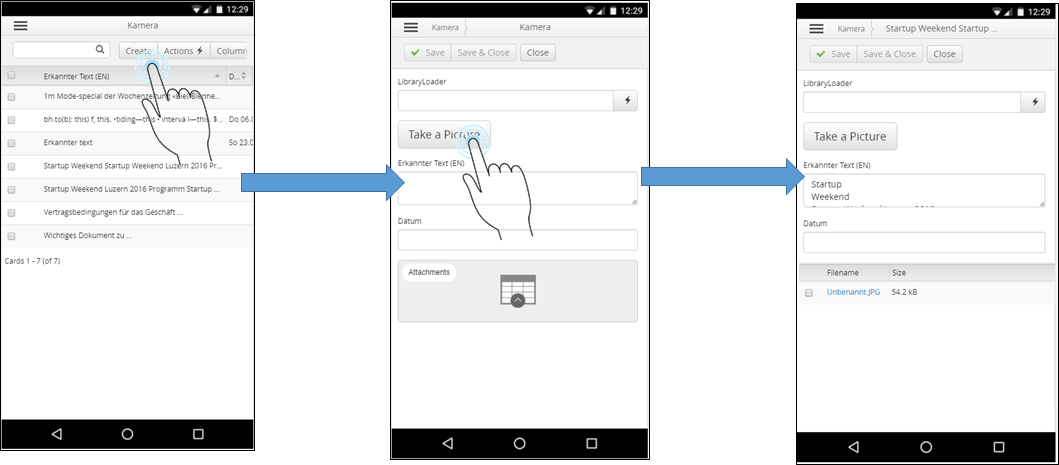
JavaScript is established as an integral part of the modern web. While static web pages were very usual in the early days of the World Wide Web and a long time after that, it's not possible to imagine pages without dynamic content nowadays. Due to its wide spread, there are many platforms and web services offering a Javscript API. Hereby, a Protogrid App can easily be extended with external services. For example, to make automatic storage of searchable content from photos or scans in Protorid available, ocr.space's JQuery/Ajax API easily can be implemented. As shown in the screenshots, the scanned text is stored in less than no time and sent by mail to the user.

OCR App Screenshots

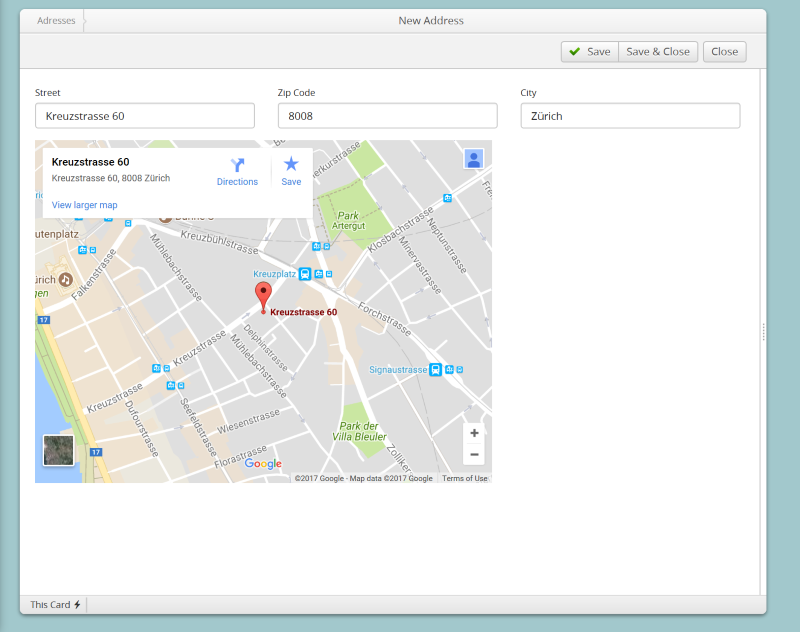
Google also offers a API for its map services. Using this API the location of an address can be determined and afterwards shown on an embedded map. In Protogrid, there only has to be a corresponding field in which the map will be displayed. Via ScriptLibrary, a listener for the address field is defined which queries the API and updates the embedded map when the address changes ("onchange" event).
Address on Google Maps
Of course, this functionality is not limited to Google Maps. Bing Maps and Openstreetmaps offer similar APIs, to name at least two alternatives.

Due to Javscript's popularity and its libraries, Protogrid can simply be extended by data and services from external sources. Whether you want to request stock prices live or whether you want to archive your Social Media messages, there are many possiblities to make use of Javscript within Protogrid.

Create a Selection Field in Protogrid

Sonja Blum , 2017-06-15

Drop down selection fields are one of the most comfortable components of forms because they allow to propose certain values to users or to restrict the input options. In the following I'll show you how to easily create a drop down selection field in Protogrid.
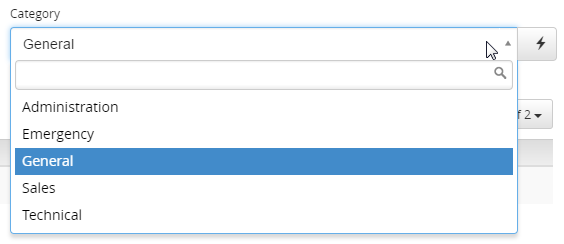
Drop Down Selection Field

We start from a simple application called "document storage", which contains the simple Proto "Document". This Proto currently defines a field for the name of the document and the possibility to attach files to documents. The Quickstart Tutorial leads you step by step through the creation of such an application. Now we also want to be able to choose a category for documents by selecting values in a drop down field.

Create the Proto "Category"

First we create a new Proto (see the Quickstart Tutorial chapter 8 for details): In the menu entry "Protos" we "Create" a new Proto, which gets the name "Category" and the plural "Categories". We save the Proto and add the necessary fields. To do this, in secion "fields and widgets" we create a field of typ "text-fiel-definition". In the opening card, we configure the new textfield and choose the label "category name" and the help text "enter the name of your category here". Since every category needs a name, this field is mandatory. Clicking "Save & Close" we leave the text-field-definition and get redirected to the category-Proto.

Create a Relation Field

Now we can insert our selection field into the existing Proto "Document". In the menu entry "Protos" we open the Proto "Document". In the section "field and widgets", we now add a new field of type "relation field definition". Now we add a name and a help text, we choose "Category" and "Enter the category of this document here". As "Related application" we choose the application we are working on, since the Proto we want to link (our Categories) are in this application. As "Related Proto" we choose "Proto:Category", our newly created Proto.
With "Save and Close" we end the creation of this field. Our drop down selection field is ready.
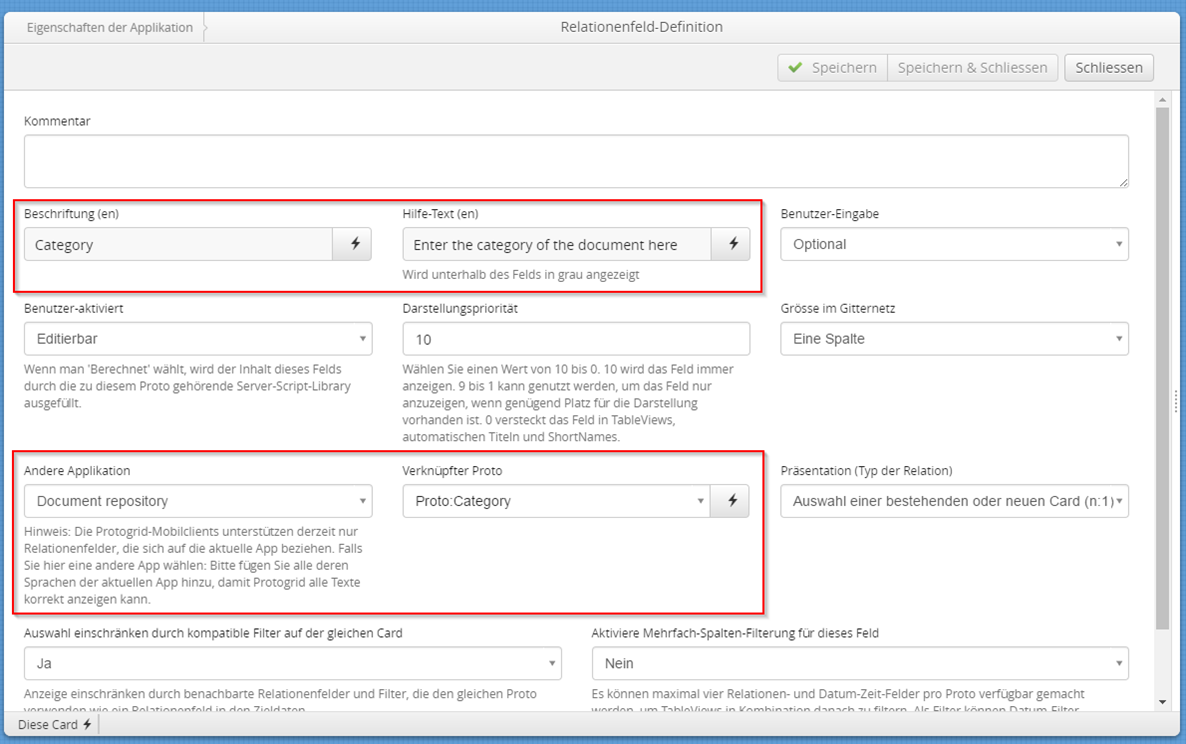
Relation of the Protos

Define Categories and Use the Field

Before we can upload Documents now, we need to define the selectable categories. Therefore we click in the menu entry "Categories" and create a new Card, where we define the name of the category. We choose "General" and "Save and Close" the Card. Create several such categories, to have a nice selection list (e.g. "Administration", "Emergencies", "Technical", "Sale").

Test the New Selection Field

After opening the overview "Documents", we create a new "Document" and notice the new field "Category". By clicking on this field, a list of all previously defined categories appears. There you can now choose the desired category either by clicking on it or by using typeahead.
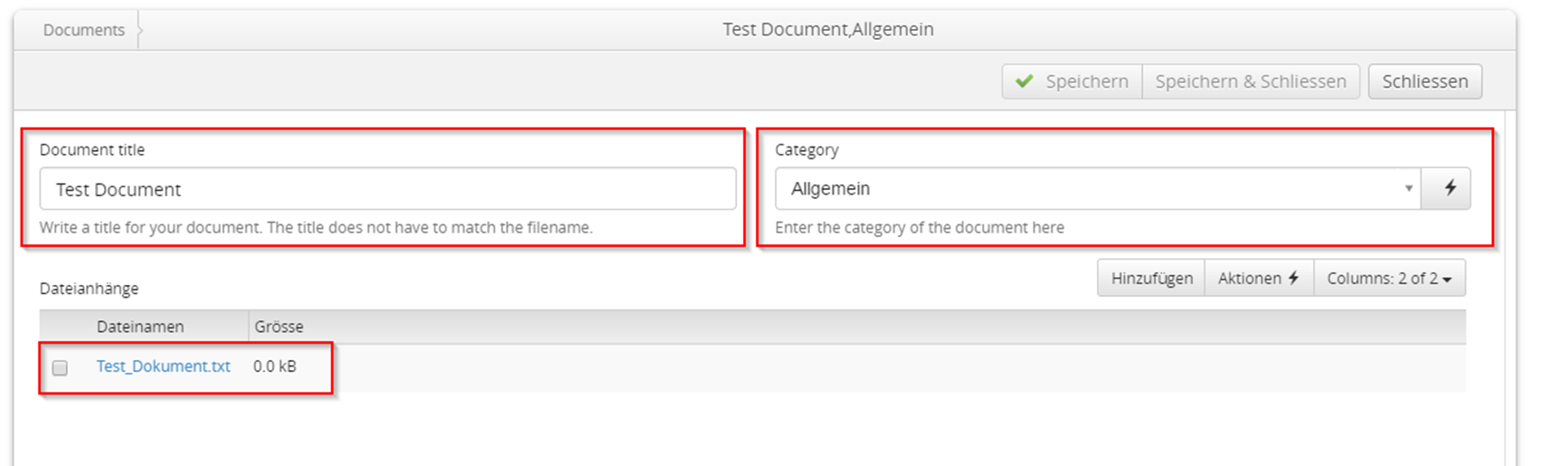
Finished Card

Es impresionante. Es gratis.

Protogrid es totalmente gratuito hasta dos usuarios con cualquier número de aplicaciones.